By The Dental Lounge | October 19, 2026
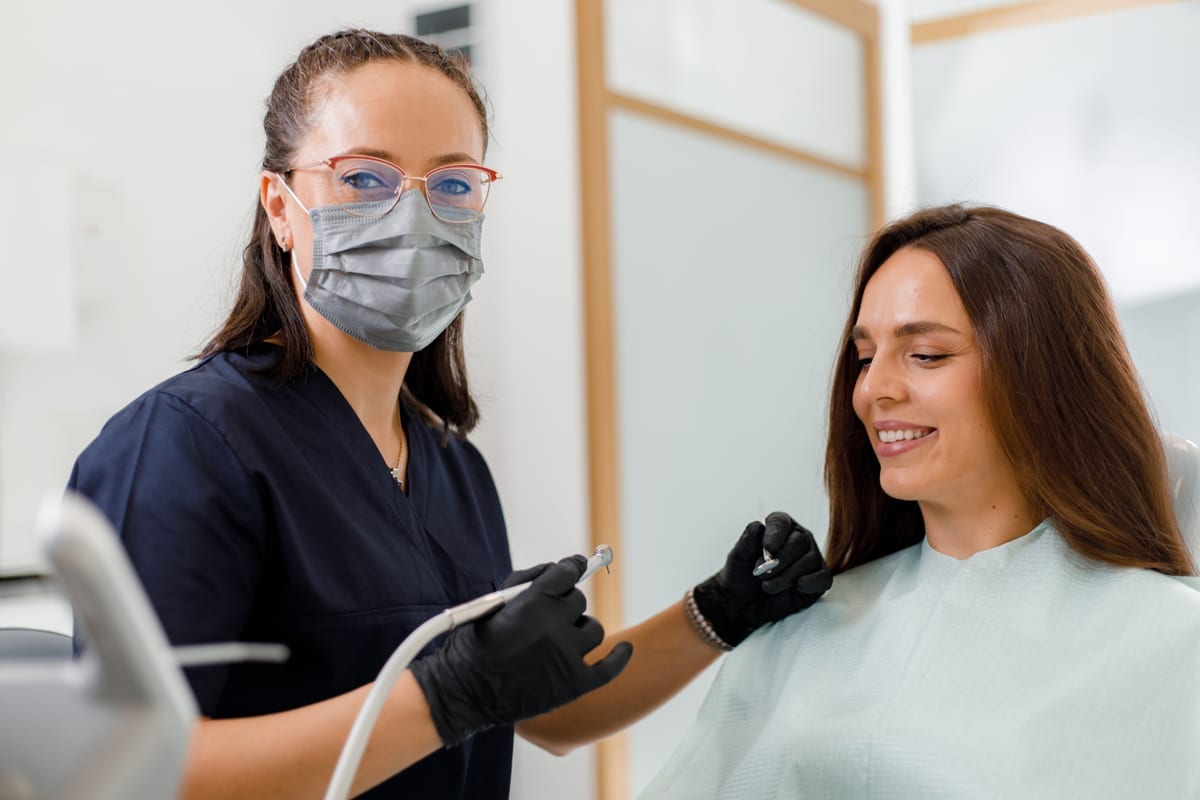
Most people know they need a professional cleaning twice a year. But few people understand what actually happens during that appointment. If you’re a patient in University Heights looking to understand your dental care better, this guide is for you. We’ll walk you through every step of a professional cleaning — the tools, the techniques, and the reasons each part matters for your health.
Understanding your professional cleaning helps you feel less anxious in the chair. It also helps you appreciate why skipping appointments can cause real problems. Our dental team at The Dental Lounge in Iowa City serves patients throughout University Heights every day. We believe informed patients make better decisions about their oral health.
Step One: The Initial Exam and Health Review
Every professional cleaning begins before the hygienist ever picks up a tool. Your hygienist starts by reviewing your health history. They look for changes in medications, new medical conditions, or concerns you’ve mentioned since your last visit. This context shapes how they approach your care.
Next, they perform a visual exam of your mouth. They check your gums, teeth, and soft tissues. They look for signs of swelling, redness, bleeding, or unusual spots. This quick scan sets the baseline before cleaning begins.
Your hygienist also takes note of areas where plaque or tartar has built up. This helps them plan which spots will need extra attention. Every mouth is different, and a good hygienist adjusts their approach to fit your specific needs.
What Hygienists Look For: Probing, Charting, and Gum Health in University Heights
One of the most important steps in your professional cleaning is periodontal probing. Your hygienist uses a small, thin instrument called a probe. They gently insert it between your tooth and gum to measure the depth of the pocket there. Healthy pockets measure between one and three millimeters.
Deeper pockets may signal early gum disease. Left untreated, gum disease can damage the bone supporting your teeth. Our team provides periodontal treatment when early signs appear — catching problems early saves patients from more serious care later.
Here’s what your hygienist records during charting:
- Pocket depth measurements around each tooth
- Signs of bleeding when probed
- Recession of the gum line
- Tooth mobility or looseness
- Areas of plaque or tartar buildup
This data creates a map of your gum health over time. Comparing charts from visit to visit helps your hygienist spot trends early. It’s one of the most valuable parts of the entire appointment.
Scaling and Polishing: The Core of Your Professional Cleaning
Once your hygienist has assessed your mouth, the cleaning itself begins. This process is called scaling. They use specialized instruments to remove plaque and tartar from the surface of each tooth. Plaque is soft and sticky. Tartar — also called calculus — is hardened plaque that brushing alone cannot remove.
Some hygienists use an ultrasonic scaler. This device vibrates at a high frequency and uses a water stream to break up deposits. Others use hand instruments called curettes and scalers. Many hygienists use a combination of both tools for the best result.
Scaling happens above and below the gum line. Buildup below the gum line is especially important to remove. Bacteria living in those deposits irritate gum tissue and contribute to bone loss over time.
After scaling, your hygienist polishes your teeth. They use a rotating rubber cup and a mildly abrasive paste called prophy paste. Polishing removes surface stains and leaves teeth feeling smooth. Smooth tooth surfaces are harder for plaque to cling to — making your home care more effective.
Fluoride Treatments and Why They Still Matter for Adults
Many patients assume fluoride treatments are just for children. That’s a common misconception. Adults benefit from fluoride too — especially those with dry mouth, a history of cavities, or exposed root surfaces. Your hygienist may recommend a fluoride treatment at the end of your cleaning.
Fluoride strengthens enamel by helping remineralize areas weakened by acid exposure. It also makes enamel more resistant to future acid attacks from bacteria. The treatment typically takes just a few minutes. It comes in the form of a foam, gel, or varnish applied directly to the teeth.
Here are some patients who benefit most from fluoride at cleanings:
- Adults with a high cavity rate
- Patients using medications that cause dry mouth
- Those with exposed root surfaces due to gum recession
- Patients undergoing orthodontic treatment
- Anyone who drinks primarily bottled water without fluoride
Our team discusses whether fluoride is right for you based on your individual history. It’s a simple step that delivers meaningful protection.
Oral Cancer Screening: The Step You Shouldn’t Skip
A professional cleaning includes more than teeth. Your hygienist and dentist also screen for oral cancer during your visit. An Oral Cancer Screening University Heights patients receive at The Dental Lounge is a thorough visual and physical check of your oral tissues. This includes your lips, cheeks, tongue, floor of the mouth, and throat.
Early detection dramatically improves outcomes for oral cancer. Many early-stage lesions cause no pain and are invisible to patients. That’s why professional screening matters — it catches what you can’t see or feel on your own.
Your provider checks for unusual patches, lumps, sores that don’t heal, or changes in tissue color. If anything looks suspicious, they’ll recommend follow-up. Most findings turn out to be benign, but identifying the rare exception early can be life-saving.
What a Complete Cleaning Appointment Covers
When patients in University Heights ask what to expect, we like to summarize the full appointment clearly. A comprehensive professional cleaning covers all of the following:
- Health history review and medication check
- Visual exam of teeth and soft tissues
- Periodontal probing and charting
- Scaling above and below the gum line
- Polishing with prophy paste
- Flossing between all teeth
- Fluoride treatment if recommended
- Oral cancer screening
- Dentist exam and review of X-rays
The entire visit typically takes 60 to 90 minutes. Patients with significant buildup or early gum disease may need additional time. Our team always explains what they’re doing and why throughout the appointment.
We also take time to review your home care routine. Your hygienist can recommend specific brushing techniques, floss types, or tools like water flossers based on your needs. Good home care between visits makes every cleaning easier and more effective.
Beyond Cleanings: How Your Visit Connects to Overall Dental Care
Your professional cleaning is one part of a broader picture of oral health. At The Dental Lounge, we offer a full range of services to support patients throughout University Heights. Whether you need a night guard for grinding, a tooth-colored filling, or more complex care, our team coordinates it all.
Patients sometimes ask about cosmetic options after getting their teeth cleaned. A freshly cleaned smile is also the perfect starting point for exploring Cosmetic Dentistry University Heights residents trust. We believe every patient deserves to feel confident in their smile.
Regular cleanings also reduce the likelihood of needing emergency care. Catching decay early means smaller fillings and less invasive treatment. Preventing gum disease means avoiding tooth loss later. The value of consistent dental visits is hard to overstate.
Our goal is simple. We want every University Heights patient who walks through our doors to leave feeling informed, comfortable, and cared for. Book Now to schedule your appointment with our team.
Frequently Asked Questions
How long does a professional cleaning typically take?
Most professional cleanings take between 60 and 90 minutes. The time varies based on the amount of buildup present and whether additional services like X-rays or a full periodontal charting are included. Patients with significant tartar or gum concerns may need a longer appointment.
Is a professional cleaning painful?
Most patients experience little to no discomfort during a cleaning. Those with sensitive gums or significant buildup may feel some pressure or mild sensitivity. Letting your hygienist know about any discomfort helps them adjust their technique. Topical numbing gel is available for patients who need extra comfort.
How often should University Heights patients get a professional cleaning?
Most healthy adults should schedule a professional cleaning every six months. Patients with active gum disease or a history of heavy buildup may benefit from cleanings every three to four months. Your hygienist will recommend a schedule based on your specific oral health needs.
What is the difference between a regular cleaning and a deep cleaning?
A regular cleaning — called a prophylaxis — removes plaque and tartar from above and just below the gum line in healthy mouths. A deep cleaning, or scaling and root planing, targets deeper pockets and root surfaces affected by gum disease. Your hygienist determines which type you need based on probing measurements and gum health findings.
Why does my hygienist call out numbers during the exam?
Those numbers are your pocket depth measurements recorded during periodontal probing. Each number represents the depth of the space between your tooth and gum in millimeters. Lower numbers indicate healthier gums. Your hygienist records these to track changes over time and catch signs of gum disease early.